The George Spangler Farm Civil War Hospital Site
July 9, 2014Friday, June 06, 2014 to Sunday, August 10, 2014
Time: 10:00am-2:00pm
Educational Event
The George Spangler Farm Civil War Hospital Site is one of the most intact Civil War field hospitals used during the battle of Gettysburg. During and after the battle, the Spangler family’s homestead was occupied by the Union army’s Eleventh Corps who used the buildings and fields as a hospital for some 1,900 wounded Union and Confederate soldiers.
Free admission and shuttle tickets are available at the Ticketing Counter inside Gettysburg National Military Park Museum & Visitor Center. The site is accessible by shuttle only. Tickets may only be obtained the day of your visit to the Spangler Farm.
Program Schedule
An Army Field Hospital: The George Spangler Farm
11am-Noon
Join a National Park Service Ranger at the George Spangler Farm and discover the field hospital where over 1,900 soldiers wounded in the battle of Gettysburg were cared for.
Arts and Trades of the Past
10:15-10:45am
12:15-12:45pm
Join living historians demonstrating trades of the period and get a glimpse at civilian life at the farm.
History Comes to Life: War Reaches the Homefront
1-1:30pm
View a dramatic ensemble cast of soldiers and civilians who witnessed the battle of Gettysburg and the George Spangler Farm’s transformation from home to hospital.
Interactive History Encampments
10am-2pm
Mingle with living historians in authentic camps portraying the civilian experience, civilian aide societies, Civil War field medicine and Union artillery.
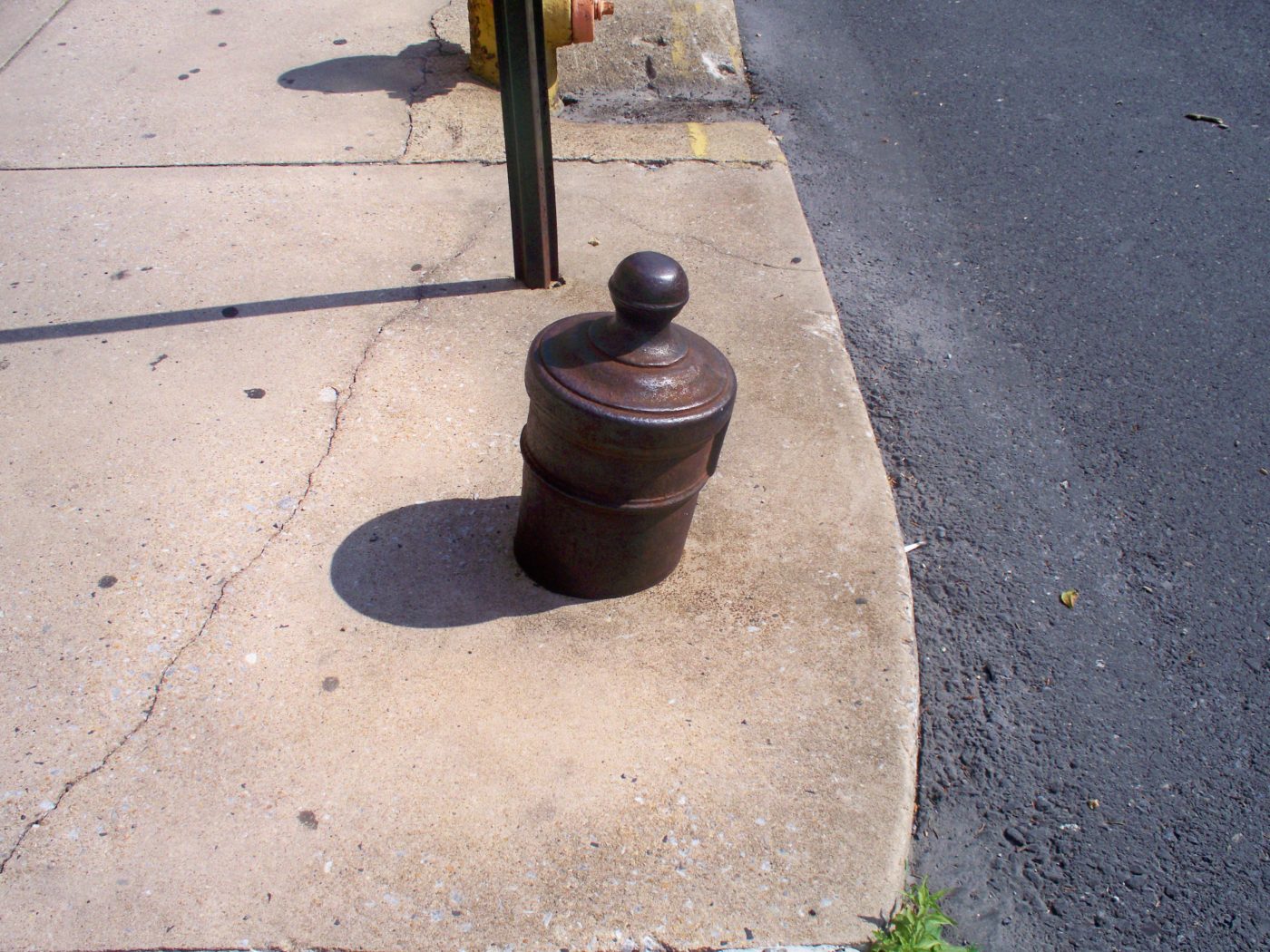
Penelope
June 23, 2014
Located on Baltimore Street in front of what was once the office of “The Gettysburg Compiler” the Democratic town newspaper, is a half buried cannon affectionately known as “Penelope”.
A relic from the War of 1812 & prior to 1855 this gun stood upright & ready for action.
Henry Stahle the outspoken publisher of the “Compiler” would have this cannon fired in celebration after every Democratic election victory.
In 1855, however, the gun was overloaded with powder & the barrel exploded upon firing. Rather than toss poor old “Penelope” on the trash pile, Mr. Stahle elected to have her buried in front of his office for all the world to see.
She was there during the Battle of Gettysburg & soldiers on both sides had to run around this strange sight. It makes you wonder what possibly could have gone through their minds as they tried to figure out the story behind this unique piece of town history.
Who is Jennie Wade?
May 28, 2014Born Mary Virginia “Jennie” Wade, Jennie Wade worked as a seamstress with her mother during the Civil War era. Because of the pending war, Jennie, along with her brother and neighbor boy left their home on Breckenridge Street to go to her sisters as she felt it would be safer, and her mother was already there helping with her sister Georgia’s newborn.
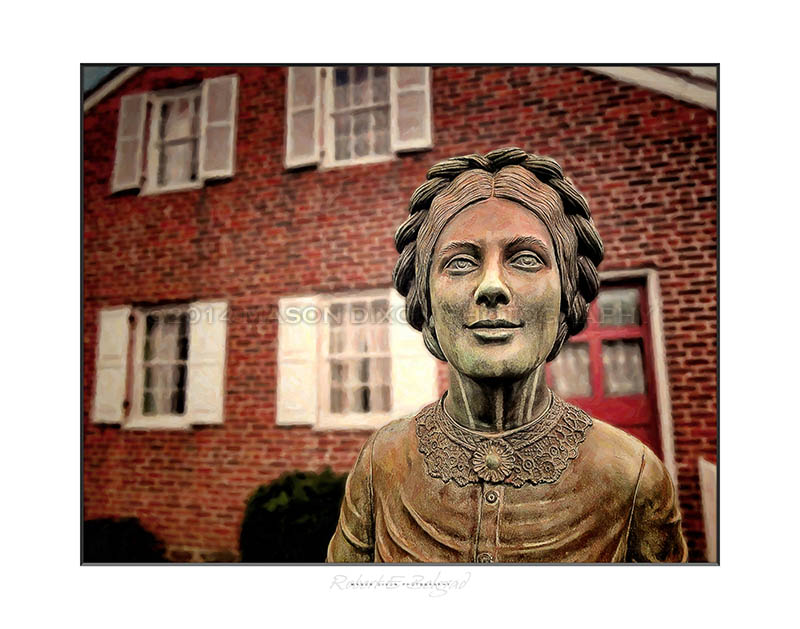 Unfortunately this turned out to be a horrible mistake, as the Confederate forces moved into Gettysburg on July 1, 1863. Jennie’s family helped the Union soldiers by providing bread and water, and on a fateful July 3rd morning Jennie had just begun kneading a new batch of dough when she was hit by a Confederate soldier’s bullet which had pierced the house. The round traveled through Jennie’s shoulder and heart, and came to rest in her corset.
At just 20 years old, Jennie Wade became the only civilian casualty killed during the Battle of Gettysburg.
Learn more about Jennie Wade and the Jennie Wade House via the button at the top of the page, or in our “Quick Links” section to the left.
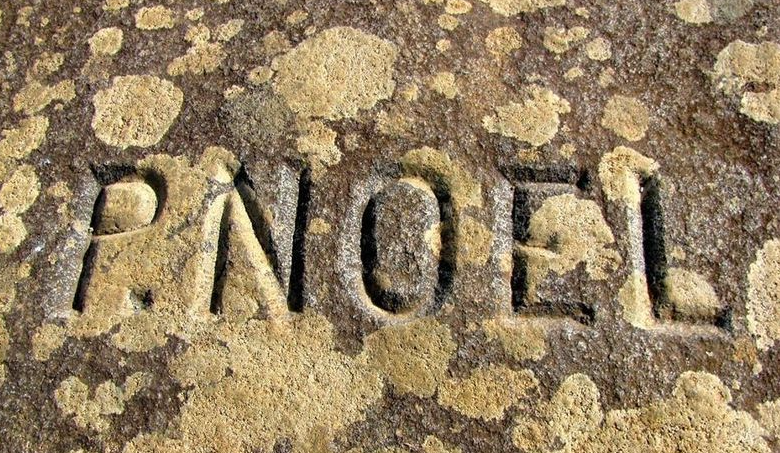
Peggy Noel
April 25, 2014Traveling a few miles out of Gettysburg to the West on Fairfield Road you cross a small bridge over Marsh Creek. The slow moving water winds slowly off to the left along Gettysburg Campground creating a rather picturesque scene. This quiet area, however, holds a rather tragic tale… the tale of Peggy Noel, that has been told and retold for many years, going back to the days before the Civil War.
According to the story, a young Gettysburg woman was traveling the road on a dark, snowy night. Peggy Noel was returning home from a trip to Fairfield and was running late. To make up for lost time, the coachman was going too fast for the poor conditions that evening. As they approached the bridge, the horses tripped and fell to the muddy roadway. The driver was thrown to the side of the road. He looked back in horror to see the coach topple and the doors spring open. Peggy Noel was thrown from her coach. She became entangled in the large spoked rear wheel and to the driver’s horror he saw her decapitated. The head of the young woman rolled across the bridge eventually falling into the water below.
For days they searched the banks of the creek to no avail. Eventually Peggy went to the grave headless. Rumor tells us that the family did not mark the grave. They couldn’t bear the thought of visiting a site of such horror, a grave with a headless corpse. There is a rock out on the battlefield just north of Devil’s Den with the letters P. Noel carved into it. To this day no one knows when it was put there or who did it. Could it be the final resting-place of Peggy Noel?
Along the banks of Marsh Creek, South of Fairfield Road, stories persist of a headless woman wading through the waters. She appears to be searching for something. Could Peggy still be searching for her head, hoping to be again complete!
I had read this story years ago in a local ghost storybook and filed it away in my mind. Imagine my surprise in the summer of 2002, when a family of 4 (Mom, Dad, son of about 17 and daughter, maybe 13), approached me after a Baltimore Street ghost tour. The son acted as the spokesman for the group. He said that he had a silly question for me about a ghost story. I told him that the only silly questions are those that don’t get asked and I’d be happy to hear his. That is when he surprised me by saying that the family had arrived in Gettysburg a few days earlier and had taken some historical tours but my tour was their first adventure into the spirit world. As he spoke, I could see that the mother was very uncomfortable with the whole situation. I then found out why. He went on to ask if I knew stories concerning a headless woman in the vicinity of Gettysburg Campground out on Fairfield Road. As I started to search the recesses in my mind, I asked out of curiosity, Why?
It seems on that very morning, his mother had awakened just before dawn. They were staying at a campsite along Marsh Creek just off Fairfield Road. The mother decided to go out in the fresh morning air and walk to the restrooms. Rather than return directly to the camper, she took a longer way back, walking along the edge of the creek in the morning air.
It wasn’t long after that, the mother awakened the rest of the family as she came screaming and crying into the camper. It took them 15-20 minutes to calm her down to the point that she could tell her tale.
(To be Continued)
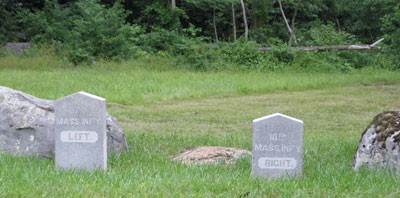
Regimental Flank Markers
March 13, 2014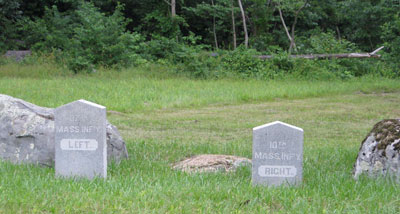
Located throughout the battlefield and often mistaken for graves, these small, rectangular stones are known as regimental flank markers. They are placed on either side of monuments or cannons and note the extreme ends of particular regiments or batteries. Engraved with the regimental/battery name and number and bearing the letter R or L (or sometimes RF or LF), these markers will assist the visitor to visualize the line that was formed by that unit. Fighting, in lines, shoulder to shoulder these stones tell you how far the line stretched and which direction the men were facing. Quite frequently the stones for different units will be found right next to each other on the field. For example, the right flank marker for one unit will stand directly next to the left flank marker of its neighbor in line helping one better grasp the infantry and artillery tactics of the 19th Century.
Castle at Little Round Top
September 10, 2013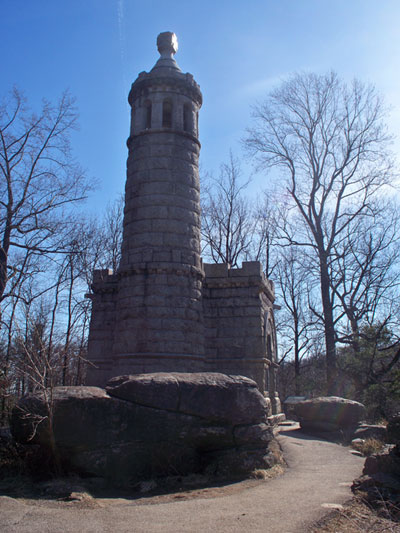 The “castle” on Little Round Top is always a favorite of visitors to the battlefield. Dedicated on July 3, 1893 at a cost of almost $11,000.00 it is without question the largest & most expensive regimental monument on the field.
The memorial represents the 44th New York & (2) companies from the 12th New York Infantry Regiments & as is the case with most of the monuments the castle has a story to tell – the dimensions of the monument were purposely designed to reflect the numeric designations of the units it represents. The tower is 44 feet high & the interior chamber is 12 feet square.
There is an observation deck which can be reached by climbing a circular staircase inside.
Bronze plaques found inside the chamber contain a complete muster roll for each company of the regiment.
This memorial was designed by Union General Daniel Butterfield who also adapted the music for “Taps” for his Brigade (the Third), First Division, Fifth Army Corps, Army of the Potomac in July, 1862.
The 44th New York was raised as a memorial to Ephraim Elmer Ellsworth who was the first Union officer killed during the war.
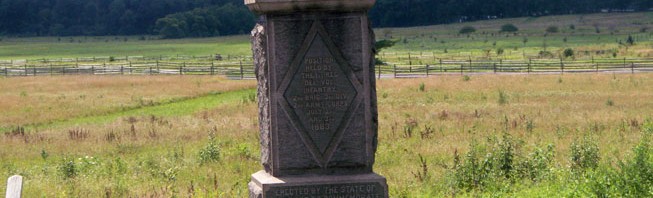
1st Delaware Monument
August 16, 2013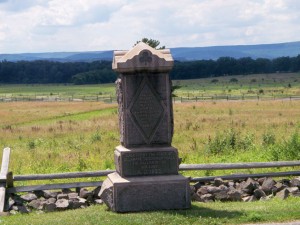 The State of Delaware supplied two regiments for the Union at the Battle of Gettysburg. One of these, the 1st Delaware, had the opportunity to spearhead a counter-charge on July 3rd as the the attack of General Pickett faltered at the wall these men were defending. This counter-assault by the men from Delaware resulted in the capture of several Confederate battle flags & many prisoners. The Battle of Gettysburg was to cost this unit 77 casualties & at battle’s end they were led by a lieutenant who was the highest ranking officer left. Their memorial was dedicated on June 10, 1886 & may be found on Hancock Avenue at the wall over which they charged that July day 150 years ago.

Charlie Weaver’s Carvings on Display
June 24, 2013Charlie Weaver’s Carvings On display at:
Soldiers National Museum
777 Baltimore Street
Gettysburg, PA 17325
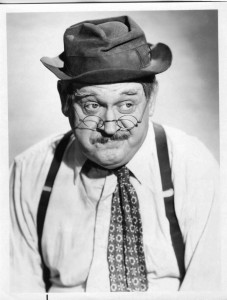
Who was Charlie Weaver?
Clifford Charles Arquette
(12/27/1905 – 10/23/1974)
Cliff, born in Toledo, Ohio was a comedian, actor, pianist, composer, songwriter, wood carver and Civil War buff; however, he was best known for his role as Charlie Weaver.
His family got their start in show business largely due to his career (His son Lewis, and his grandchildren Patricia, Rosanna, Alexis, Richmond, and David Arquette).
Cliff Arquette’s Soldiers Museum opened in Gettysburg in 1959.
Due to professional obligations in California, he sold the museum to Leroy Smith who continued operating it as Charlie Weaver’s American Museum of the Civil War with Cliff’s blessing.
These carvings are a selection of the 57 figures that Charlie did.
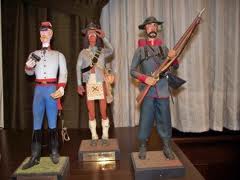
For Charlie, it was a labor of love, requiring 25 years of research and careful work to ensure that everything about the figures was perfectly reproduced.
He made them entirely by hand starting by sawing the white pine block, down to every last stitch in the uniforms.
Charlie made all of the accessories, including making custom molds to cast each of the trigger plates and hammerlocks on the painstakingly reproduced guns.
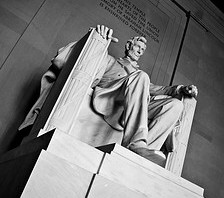
Abraham Lincoln: Did Lack of Security Lead to his Death?
February 8, 2013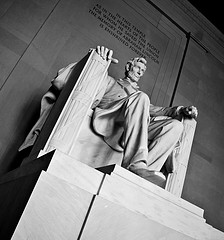 Abraham Lincoln, who was assassinated in April of 1865, was the first American president to be killed in office.
In some ways, his murder came as no surprise. There was no Secret Service at the time and he’d been receiving death threats since he was first elected, and the nation was at war with itself.
The one man assigned to protect the president at Ford’s Theatre that fateful night, John Frederick Parker, was not at his post during the show. He spent some of his time watching the show from a different part of the theatre and spent the intermission at the saloon next door, which is where he was found when the president was shot.
Unfortunately, this wasn’t unexpected. Presidential security was, at the time, scattered at best and hampered by Lincoln himself.
There were elaborate security precautions at the inauguration but they were quickly dropped for Lincoln’s first term—at his insistence.
Republican Inaugural visitor from Iowa, Charles Aldrich, wrote about the March 4, 1861 event:
I went across the street… The area in front of this northeast corner of the Capitol was filled with spectators to the number of many thousands. Just before the appearance of Mr. Lincoln, a file of soldiers, doubtless regulars, came into the area, and marched along in front of the platform, slowly making their way through the crowd. From where I stood I could see their bayonets above the heads of the people. There was at that time serious apprehension that the President might be shot when he appeared to make his address, but this small company of men was all that was in sight in the way of defense. It was quietly understood, however, that several hundred men were scattered through the crowd armed with revolvers.
But shortly thereafter, even the mounted and foot guards posted at the White House gates were dismissed.
In late 1862, two companies were assigned to protect the President — the Union Light Guard of cavalry from Ohio and the 150th Pennsylvania Regiment of infantry- at the insistence of various military leaders.
The special cavalry division, the “bucktails”, were assigned to escort Lincoln, who was prone to riding alone. Their efforts were met with marginal success.
Lincoln rode particularly often between the White House and the “Soldier’s Home”, an area in the Northeast part of the city, that was country-like and where the Lincolns had a small cottage. It was approximately a three-mile ride. He also changed his travel schedule at will.
Lincoln also frequently walked from the White House to the War Department—where the staff was under strict orders to make sure that he was escorted home.
In August of 1864, while Lincoln was riding to Soldier’s Home, he was fired upon. The shot startled his horse, which bolted, causing Lincoln to lose his hat.
It also forced Lincoln to take security more seriously, and allow for both a police guard and to accept the cavalry escorts.
It wasn’t until November, 1864 that the police force in Washington, D.C. created a four man team to act as private body guards to the president.
John Frederick Parker was one of those men. And his actions that fateful day in April let down a man, and a nation, struggling for security.
The Oldest Union Commander
November 20, 2012The Civil War brought this military man out of retirement—25 years later!
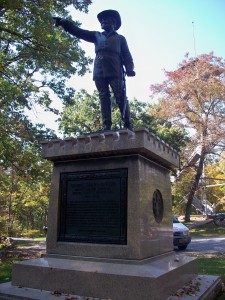
General George Sears Greene lived a fascinating life—he might just be the most interesting Civil War figure that you’ve never heard of. Second in his class at West Point, he stayed on for four years as an assistant professor in mathematics and engineering, and his students included a certain cadet named Robert E. Lee. In 1836, Greene retired from the army and that was the end of his military career…until 1862.
General Greene was 62 when the crisis of the Civil War drove him to re-enlist, making him the oldest Union commander in the Army of the Potomac. “Pap Greene,” as they sometimes called him, led with an aggressiveness that surprised many, and he applied the ingenuity that had brought him success as a civil engineer. The pinnacle of his military career was the Battle of Gettysburg: Greene and his command of 1,350 New York soldiers defended the peak of Culp’s Hill against Confederate troops that outnumbered them 3 to 1.
That was when Greene’s civil engineering influences proved not just beneficial, but decisive in the outcome of the battle. Prior to the confrontation, he insisted that his men prepare by building strong fortifications on the field of battle—an idea that his superiors showed no interest in. Those fortifications allowed Greene and his regiment to hold off multiple attacks and defend the vital Union supply line that ran along the Baltimore Pike behind them. Greene’s stand played a crucial, but often underestimated, role in the Battle of Gettysburg.
After the War, Greene returned to civil engineering and is remembered as one of the founding members of the American Society of Civil Engineers and Architects. He died just shy of the turn of the century, at the age of 97. A 2-ton boulder was transported from Culp’s Hill to Greene’s grave in Warwick, Rhode Island, where it marks his burial spot. On September 26, 1907, the State of New York honored General Greene with a portrait statue on the Gettysburg Battlefield, which you can find atop Culp’s Hill, gazing down the slopes that Greene once defended.
The Gettysburg Battlefield is home to an incredible number of breathtaking monuments and memorials! Read about some of them here!